Dear Reader,
With our 16th NFDI4Microbiota newsletter, we would like to share news about conferences, events, services and publications.
If you can think of other topics that we should cover, please let us know. We are happy to hear from you!
And now: Enjoy reading the newsletter!
Consortium News
NFDI4Microbiota Flex Funds projects presented their progress
This year NFDI4Microbiota funds four projects by its flexible funds to fill gaps in the research data management (RDM) landscape. Through these projects our active community members contribute to NFDI4Microbiota’s efforts to improve the RDM ecosystem for microbiology and to make data, software, models, and other outputs FAIR, open, and AI-ready.
In June, representatives from each project presented their progress and provided updates on the current project status:
Integrating Metadata Standards and Knowledge Graphs into Lab Routines: The Metaproteomics Use Case for Enhanced Research Data Management (project lead: Prof. Dr. Robert Heyer, ISAS): Building on previous advancements in metaproteomics workflows and research data management using OpenBIS, this project aims to further enhance the integration of metadata standards and knowledge graphs to streamline and empower microbiome research. The primary aim of this project is to enhance the quality of microbiome-based research while reducing the effort required for comprehensive metadata management, ensuring compliance with FAIR principles and rigorous study documentation.
Improving the MIxS user and developer experience (project lead: Dr. James A. Fellows Yates, Leibniz-HKI): The project aims to improve the user and developer experience of the well-established Genomic Standard Consortium’s (GSC) MIxS metadata framework and to enhance metadata reporting standards within ancient DNA.
A new framework for submitting Microbial Biotransformation of Xenobiotics data (project lead: Michael Zimmermann, EMBL): The project aims to develop a computational framework, BioXend, for the submission of microbial xenobiotic biotransformation data, implementing minimum reporting standards and enabling submission to ChEMBL via the NFDI4Microbiota CloWM platform.
Community Collection of Validation Experiments informing Preanalytic SOPs (project lead: PD Dr. Lena Biehl, Fraunhofer ITMP): The project aims to centralize and share existing and available lab generated data and protocols from validations of preanalytical methods in microbiome research within the NFDI4Microbiota Knowledge Base.
Annual NFDI4Microbiota Consortium Meeting
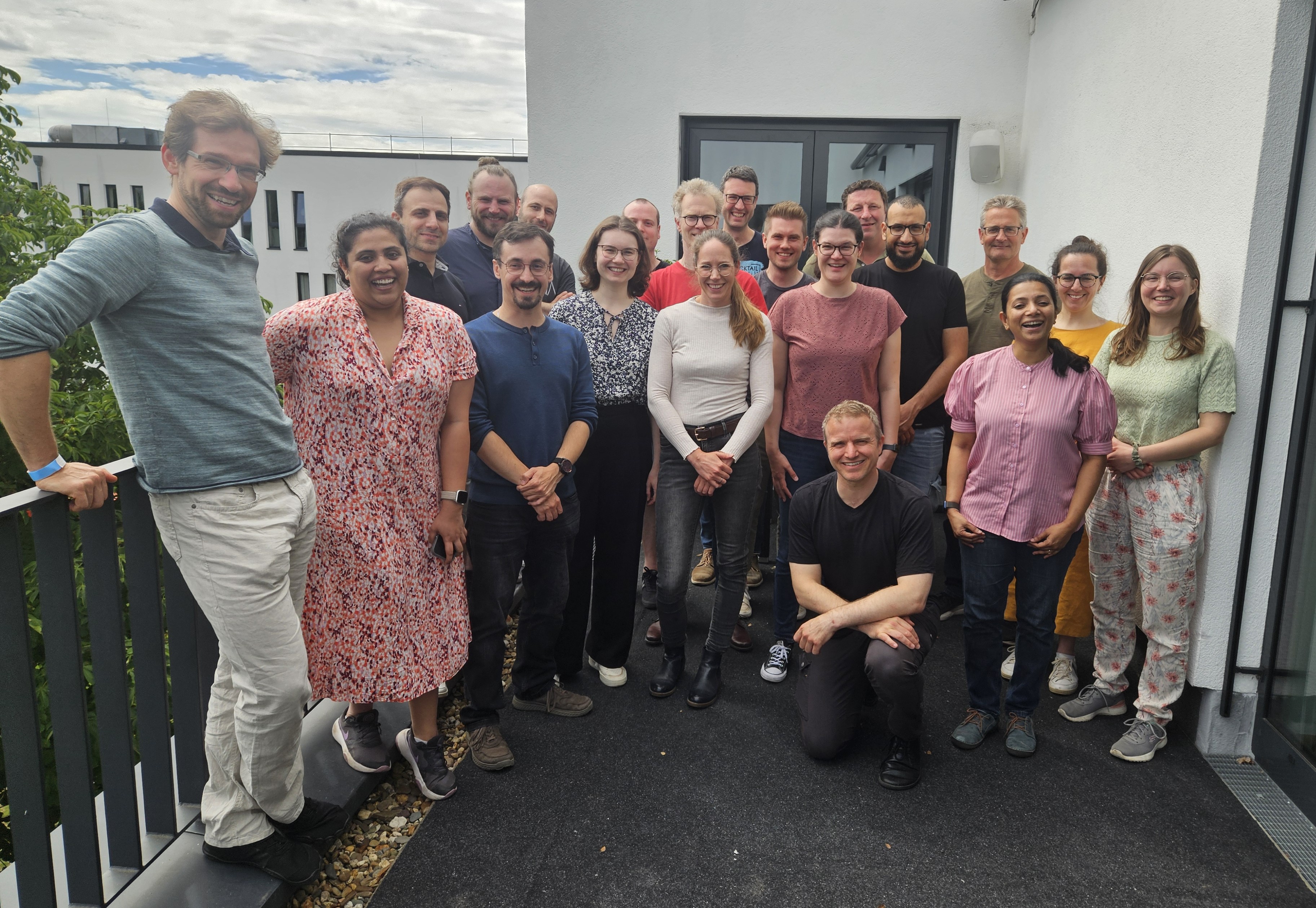
Members of NFDI4Microbiota
Biodata Interest Group expands to six NFDI consortia
The Biodata Interest Group (Biodata IG) has expanded its collaboration within the German National Research Data Infrastructure (NFDI). With the publication of a new Memorandum of Understanding (MoU, https://doi.org/10.5281/zenodo.13880944), six consortia are now working together to advance research data management in the life sciences.
Alongside the founding partners DataPLANT, NFDI4Biodiversity, and NFDI4Microbiota, the group now includes FAIRagro, NFDI4BIOIMAGE, and NFDI4Objects. Together, they aim to strengthen interoperability, develop shared services and infrastructures, and improve support for researchers working with biological data.
The new MoU defines key areas of collaboration, including joint infrastructure development, coordinated training and support services, interoperable standards and workflows, and collaborative outreach activities. A particular focus is on connecting existing offerings, creating synergies, and making research data management services easier to access.
The expanded partnership highlights the growing importance of cross-consortium collaboration and marks another step toward a more connected and sustainable NFDI ecosystem for the life sciences.
To further put the goals outlined in the MoU into practice, representatives of the six consortia met in April for their first joint in-person workshop at the Julius Kühn Institute in Berlin. Discussions focused on shared services, potential synergies, and the strategic development of future collaboration.
One key topic was the service landscape across the participating consortia: Who develops which tools and services? Which offerings can be reused or jointly expanded? Where are there still gaps for certain communities or data types? To address these questions, a comprehensive mapping of existing Biodata services is planned for 2026. This overview is intended to serve as both a shared orientation guide and a foundation for future collaborations.
In September, the Biodata IG will jointly host the 5th NFDI4Microbiota Annual Conference, Boosting Biodata Bootcamp 2026. Further details can be found below.
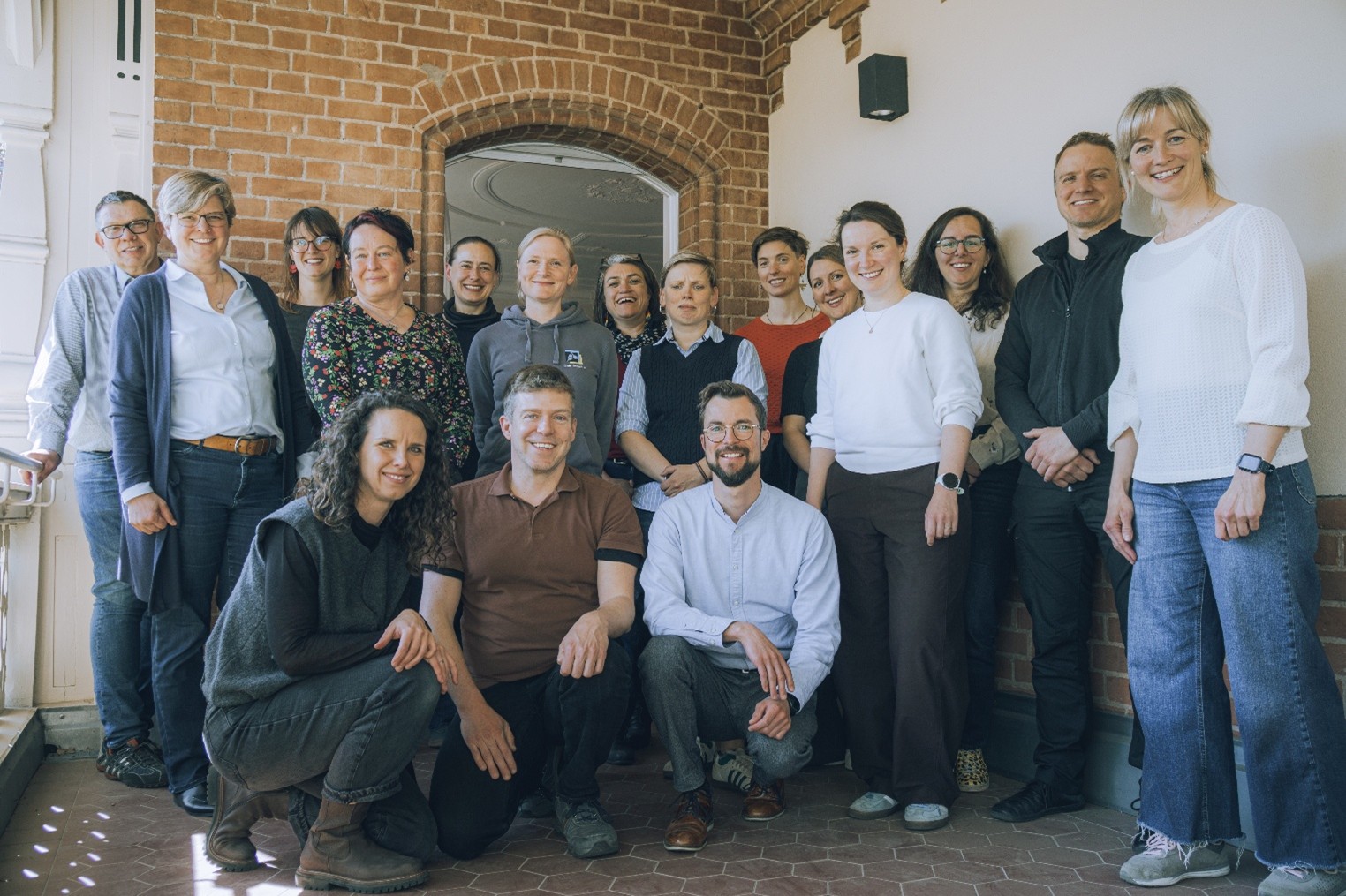
NFDI Biodata Interest Group
Community engagement – calls, events and conferences
Register for the 5th NFDI4Microbiota Annual Conference
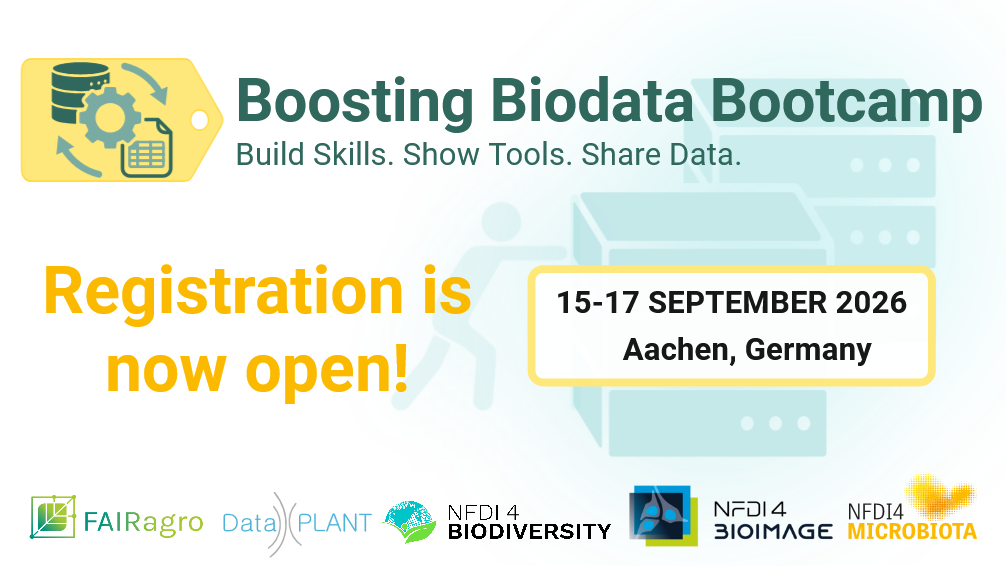
This year, NFDI4Microbiota’s Annual Conference will be held jointly with the NFDI Biodata Interest Group, bringing together the consortia NFDI4Microbiota, FAIRagro, DataPLANT, NFDI4Biodiversity, and NFDI4BIOIMAGE. The Boosting Biodata Bootcamp (B3 Conference) 2026 will take place from 15–17 September 2026 at RWTH Aachen University.
The conference aims to strengthen skills in research data management and data analysis across the biological sciences while showcasing how FAIR and reusable data contribute to excellent research. Researchers, data stewards, software developers, and infrastructure providers are invited to exchange ideas, learn from one another, and shape the future of biological data management.
The conference is particularly relevant for researchers seeking practical guidance on FAIR and AI-ready data, developers wishing to showcase tools and workflows, data stewards working on metadata standards, and anyone looking for expert support on domain-specific data challenges.
Participants can look forward to a diverse program of hands-on workshops covering research data management, computational tools, data analysis, legal aspects of data handling, FAIR Digital Objects, benchmarking, and bioimage analysis.
We are delighted to welcome two keynote speakers: Prof. Dr. Gabriele Berg, an internationally recognized expert in microbiome biotechnology, and Dr. Rubén Garrido-Oter, whose research explores the principles governing microbiota assembly, stability, and host–microbe interactions.
Participation is free of charge, but workshop places are limited. Early registration is therefore strongly recommended.
We look forward to welcoming you to Aachen this September!

Recap: NFDI4Microbiota Knowledge Base Content and Coding Sprint 2026
Recap: NFDI4Microbiota at analytica 2026
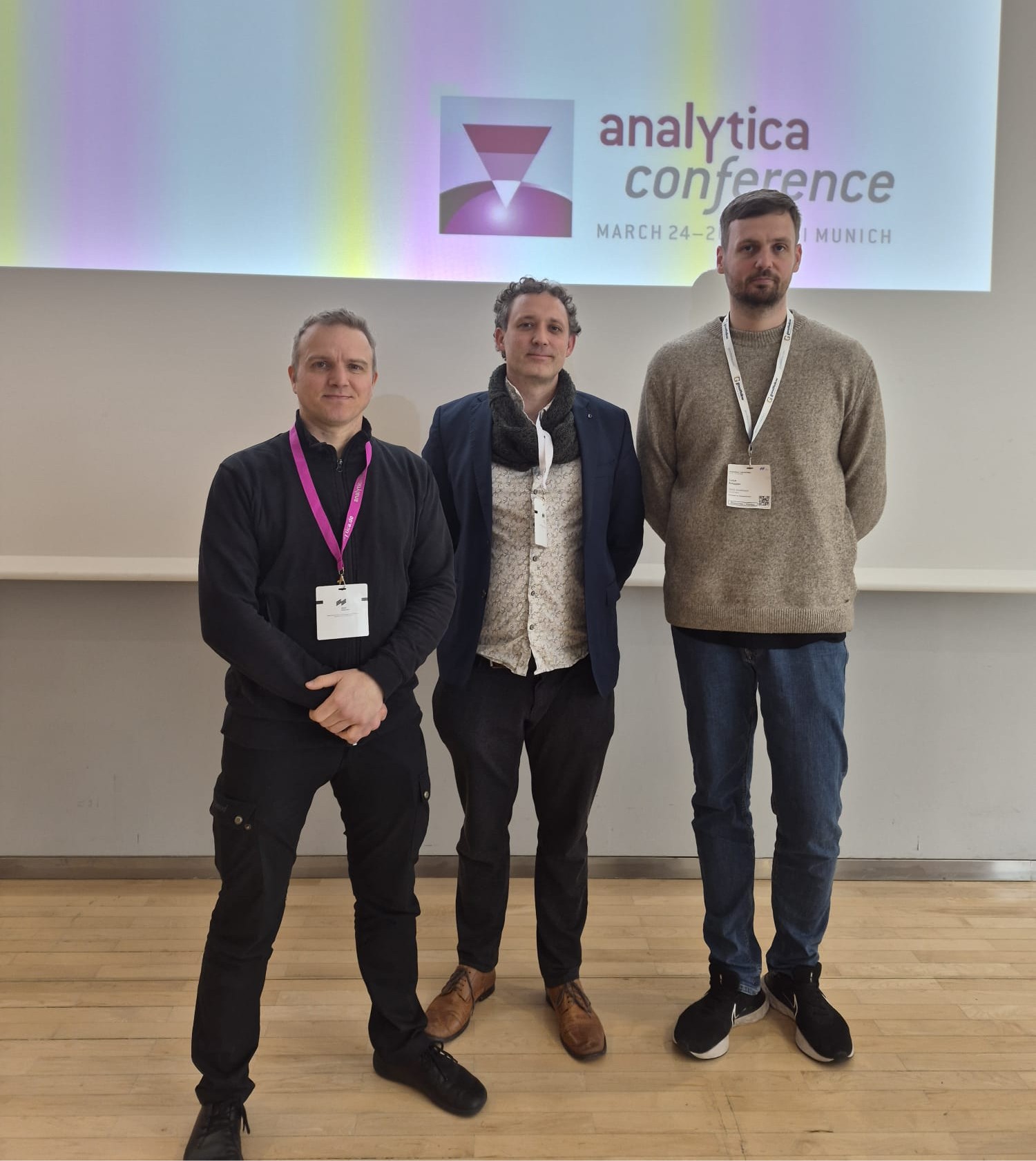
analytica 2026: Konrad Förstner, Robert Heyer, Luca Knipper
Recap: 2026 Virus Bioinformatics and nf-core Hybrid Collaborative Hackathon
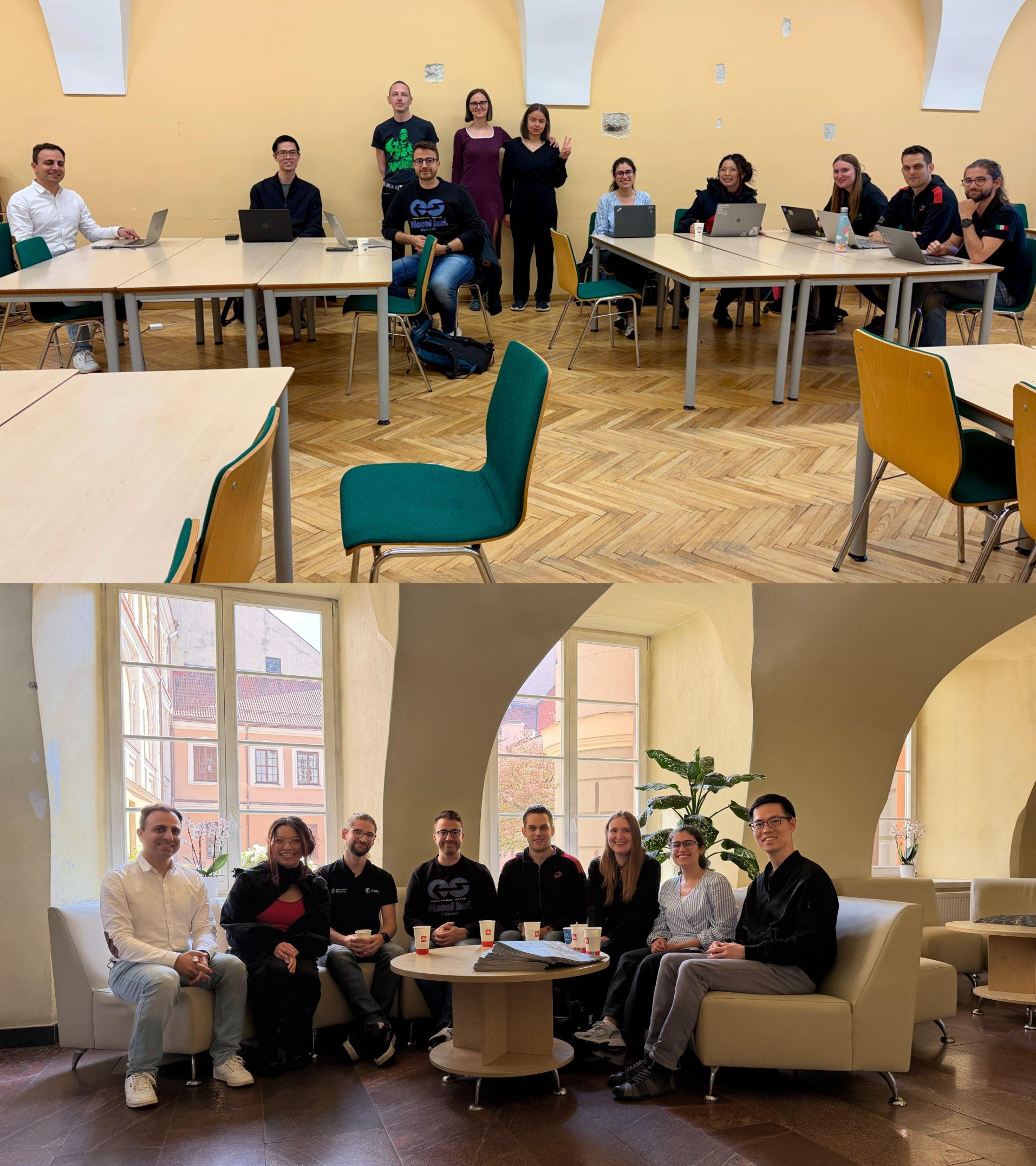
Virus Bioinformatics and nf-core Hackathon
Recap: NFDI4Microbiota at the 18th Seeon Conference
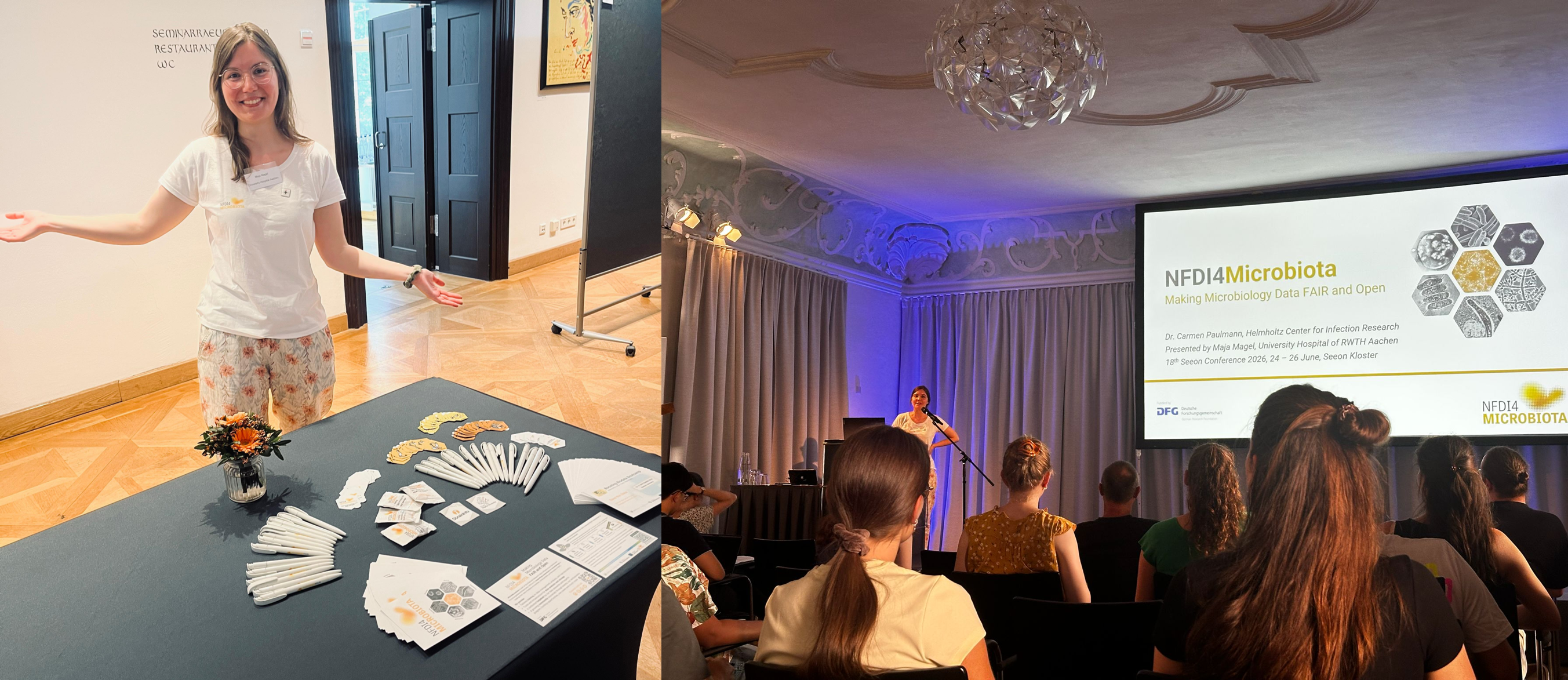
18th Seeon Conference
Take a break and join our Coffee Talks

The Coffee Talk meetings provide an opportunity to learn more about NFDI4Microbiota’s services and mission while connecting with members of the NFDI4Microbiota community and beyond. Held online every two months, these sessions are open to anyone interested in staying up to date with current developments and topics related to research data in microbiology.
In 2026, we are introducing a new Tandem Coffee Talk format. Each session will begin with a guest speaker presenting cutting-edge microbiome research, followed by an overview of relevant NFDI services and Research Data Management (RDM) solutions that support the presented scientific field.
By combining scientific insights with practical RDM approaches, the Tandem Coffee Talks aim to provide participants with both a broader understanding of current research and concrete tools and services they can apply directly in their own work.
Stay informed and find the schedule and details below and here.
6 July - Transforming Prokaryotic Taxonomy with Knowledge Graphs presented by Vanessa Scharf M.Sc. (ZB MED Cologne), Assist-Prof. Dr. Thomas C.A. Hitch and Prof. Dr. Thomas Clavel (University Hospital of RWTH Aachen). Register separately for the Zoom session taking place from 14:00 to 16:00.
7 September - Benchmarking of shotgun sequencing depth reveals the potential and limitations of shallow metagenomics and strain-level analysis presented by Dr. Nicole Treichel (University Hospital of RWTH Aachen) and tbd
19 October - Contrasting Exposure Regimes Shape the Human Gut Microbiome and Resistome: Evidence from Travel and Social Distancing presented by Prof. Dr. John Penders (Maastricht University) and NFDI4Microbiota’s Qiita service presented Prof. Dr. Stefan Janssen & Anna Rehm (JLU Gießen)
14 December - Palaeogenomics and the future of lost genomes presented by Prof. Dr. Christina Warinner (Harvard University, Max-Planck-Institute for Evolutionary Anthropology Leipzig) and on Community driven stewardship of ancient microbial genetic data
Please join us online in Zoom at 2:00 PM - 3:00 PM CEST/ CET (Meeting-ID: 696 3748 0434, Password: 760425).
Services
Our Services
NFDI4Microbiota MAG2ENA tool enters beta testing
The NFDI4Microbiota MAG2ENA tool is now available for beta testing. The tool supports the submission of microbial metagenome-assembled genomes (MAGs) to ENA while ensuring compliance with MIxS metadata standards.
The beta version is available on GitHub, and we welcome feedback from the community.
A manuscript describing the tool and its applications is currently in preparation. Community feedback collected during the testing phase will help further improve the tool ahead of its official release.
Ask your questions to our Helpdesk!

Publications
Benchmarking of shotgun sequencing depth reveals the potential and limitations of shallow metagenomics and strain-level analysis
How much sequencing depth is really needed for reliable metagenomic analyses? A new study by the group of Thomas Clavel, published in Nature Microbiology, provides important guidance for researchers using shotgun metagenomics.
Using complex mock microbial communities sequenced at depths ranging from 0.1 to 50 Gb, the authors systematically evaluated taxonomic profiling, strain-level resolution, metagenome-assembled genome (MAG) reconstruction, and functional analyses. The results show that reference-based strain identification can be achieved with relatively shallow sequencing (0.5–1.0 Gb), while reliable pathway-level functional insights require around 2 Gb. In contrast, accurate MAG reconstruction and comprehensive proteome coverage demand substantially deeper sequencing (>10 Gb).
The study also highlights important limitations of shallow metagenomics, including the impact of library preparation methods and host DNA contamination. Overall, the work provides valuable benchmarks for designing metagenomic studies and selecting sequencing depths appropriate for specific research questions. DOI: https://doi.org/10.1038/s41564-026-02334-2
maldipickr dereplicates microbial MALDI-TOF spectra to facilitate multiplexed isolation
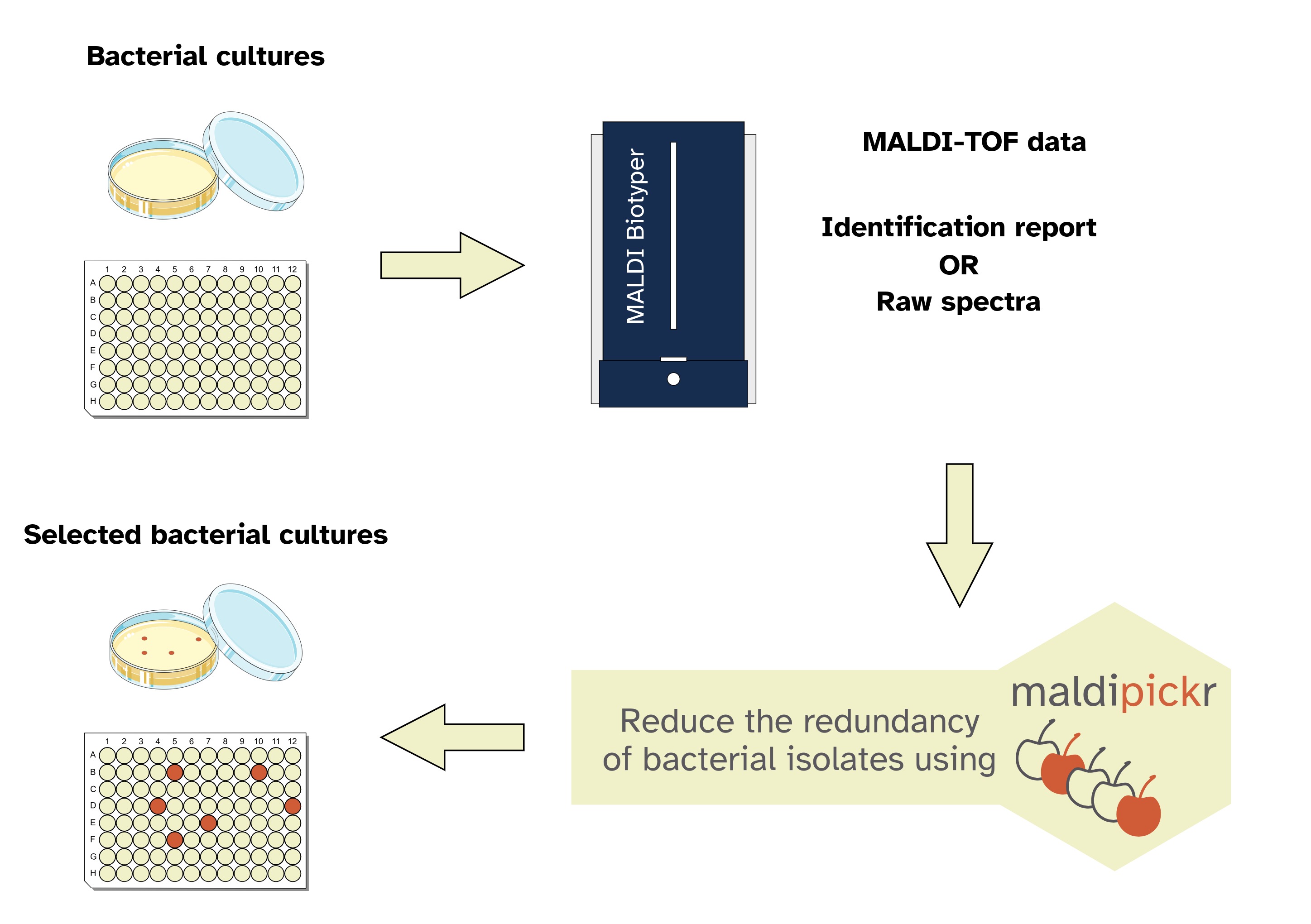
We are pleased to share our latest publication by Charlie Pauvert, David Wylensek, Selina Nüchtern, and Thomas Clavel, published in Bioinformatics Advances.
The open-source R package maldipickr enables de novo clustering of microbial MALDI-TOF mass spectra, allowing researchers to efficiently dereplicate and select isolates, thereby reducing redundancy within isolate collections and facilitating large-scale cultivation projects.
The package is open, resource-efficient, and freely available through CRAN, accompanied by comprehensive documentation. DOI: https://doi.org/10.1093/bioadv/vbag171